
Clairvaux pin
grenat
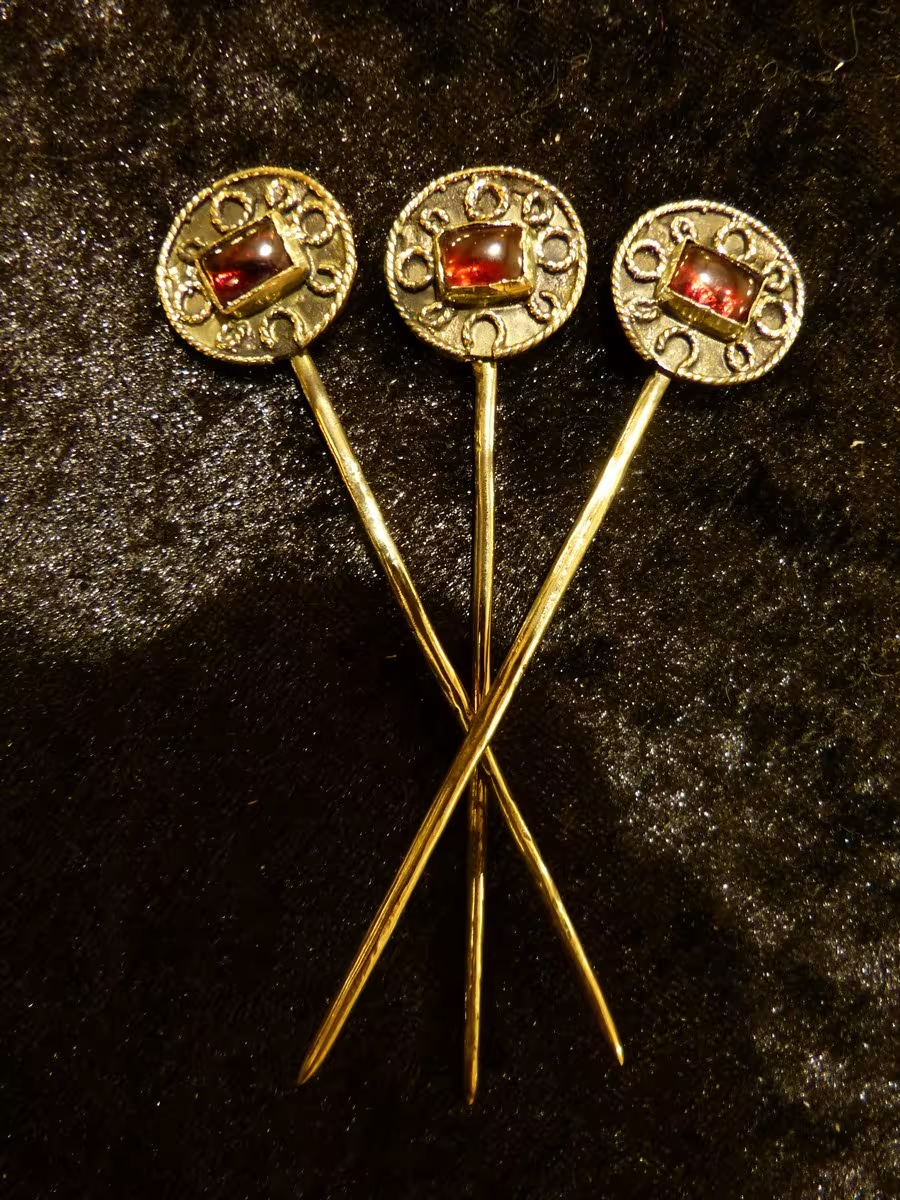
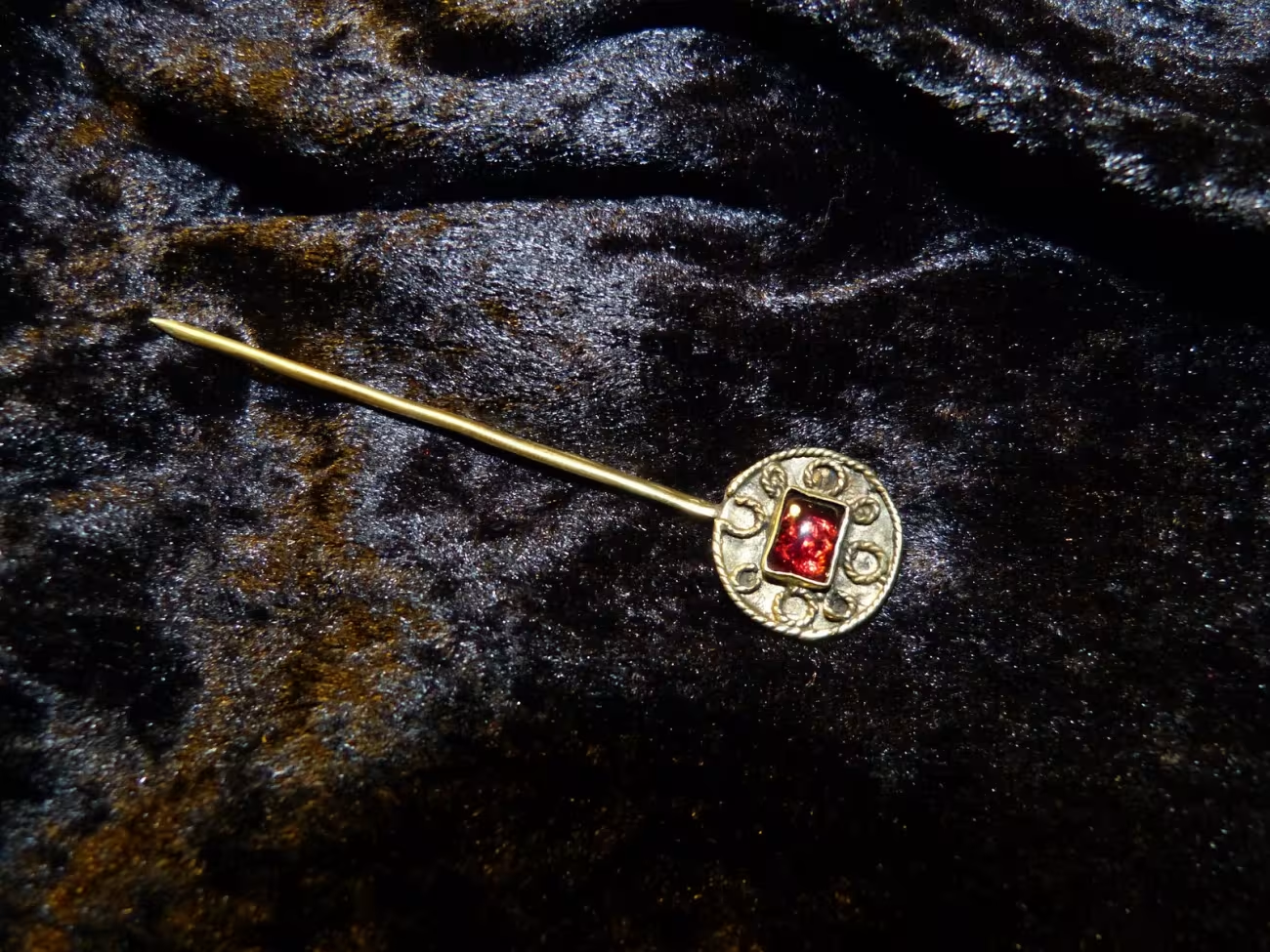
This pin was discovered in August 1820, while a weaving workshop was being fitted out for the inmates of the prison housed in the former Cistercian abbey of Clairvaux. It was found with a crozier head and a Gothic ring in the tomb of Guillaume de Joinville, Archbishop of Reims from 1219 to 1226. It must therefore have been among the very old ornaments used by the bishop, probably to fasten a vestment such as the pallium. A long gold needle is soldered to a disc on which fine filigree circles are laid. In the centre, a rectangular bezel holds a garnet whose origin has been traced to Rajasthan.
The 13th-century context of the tomb and the object’s singularity among early medieval pins nevertheless make it difficult to determine its date and place of making. However, the goldsmithing techniques used and the origin of the materials are consistent with a Western origin in the 6th century. This would mean that the object was kept as a collector’s piece over a long period.
The reproductions are made in bronze with enamel, or with a garnet set on gold foil.
Dimensions: pin 65 mm, head diameter 1.8 mm
- Materials
- Bronze, or, grenat émail Au choix : Argent, Bronze.
- Periods
- Merovingians and Carolingians