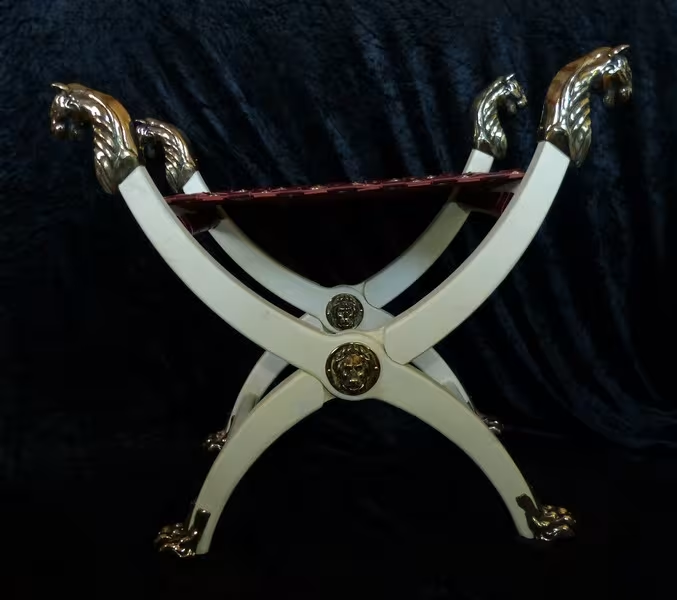
Imperial curule seat
On quotation
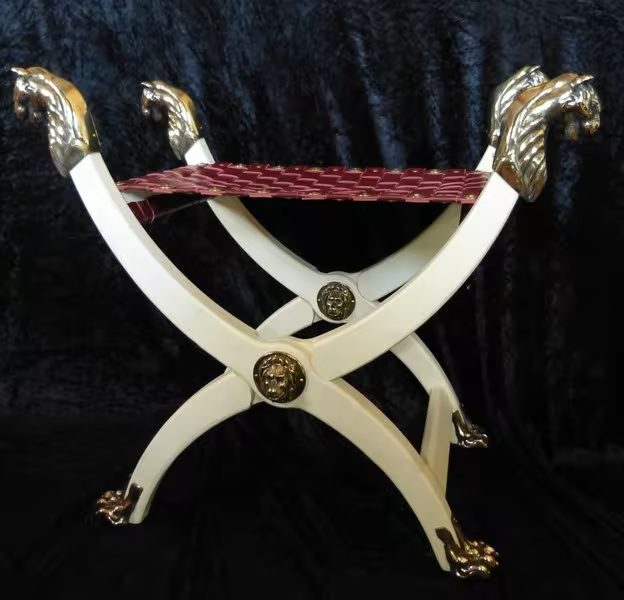
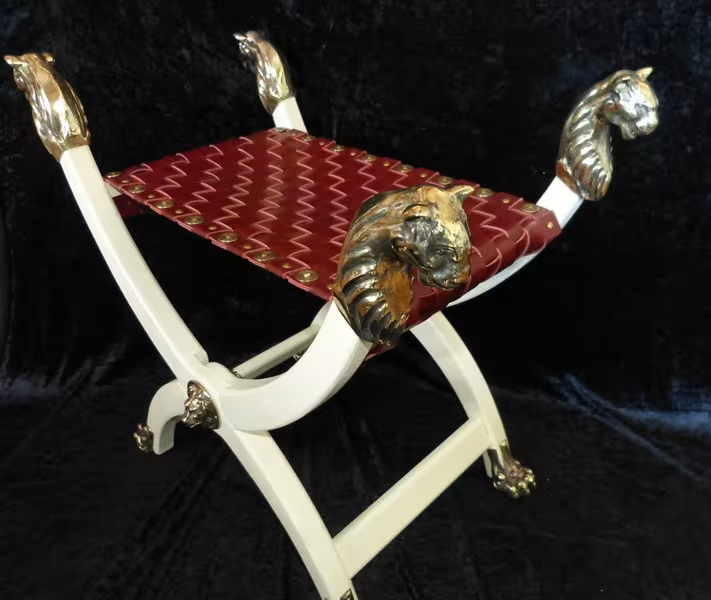
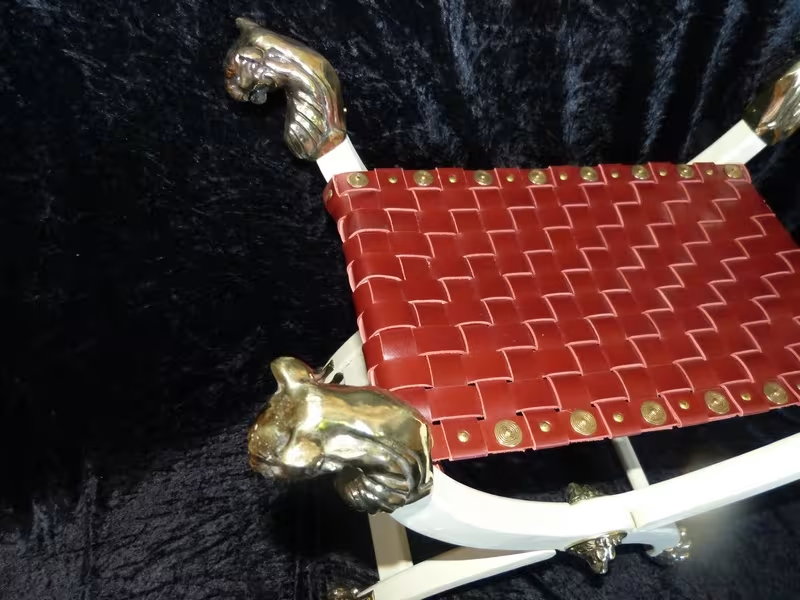
This is a Roman imperial curule seat.
It is one of the principal insignia of power in Rome.
Everything about this object is symbolic. The curule seat itself was inherited from the Etruscans, for whom it was a symbol of magistracy and power.
- The white of the wood (it could have been ivory, but I like elephants... so...) invokes Jupiter, the greatest Roman god
- The red invokes Mars, god of war and father of Romulus and Remus, the founders of Rome.
- The lions are a direct reference to Hercules, the deified demigod of legendary strength.
This seat is an "upgraded" interpretation of a seat of ivory with bronze lion's feet found in Bologna. The exact design of the lion heads and feet comes from a charred wooden piece of furniture from Pompeii.
INRAP states:
"The curule chair is one of the major symbols of power in Rome. Of Etruscan tradition, its use in Rome was at first reserved for the high magistrates (consuls, praetors) holding imperium, that is, the power to command and to punish. Under Augustus, it became one of the attributes of the emperor. Two types of seat are recorded. On the one hand, the sella curulis proper, recognisable by its S-shaped legs: first reserved for civil magistrates, it became a luxury domestic object reserved for an elite from the 1st century AD. On the other hand, the sella castrensis, with its X-shaped profile, which was the prerogative of military officers."
In antiquity, they were mostly made of steel for the simplest, of solid silver for senators, of solid gold for Julius Caesar (by special dispensation), or of ivory with bronze legs, like the one found in Bologna in the "dei Giardini Margherita" burial.
- Materials
- Hetre, bronze, acier, cuir
- Periods
- Antiquity