Merovingian bronze clasp
Agrafe seule 12€, paire d'agrafes avec chaînette 24€.
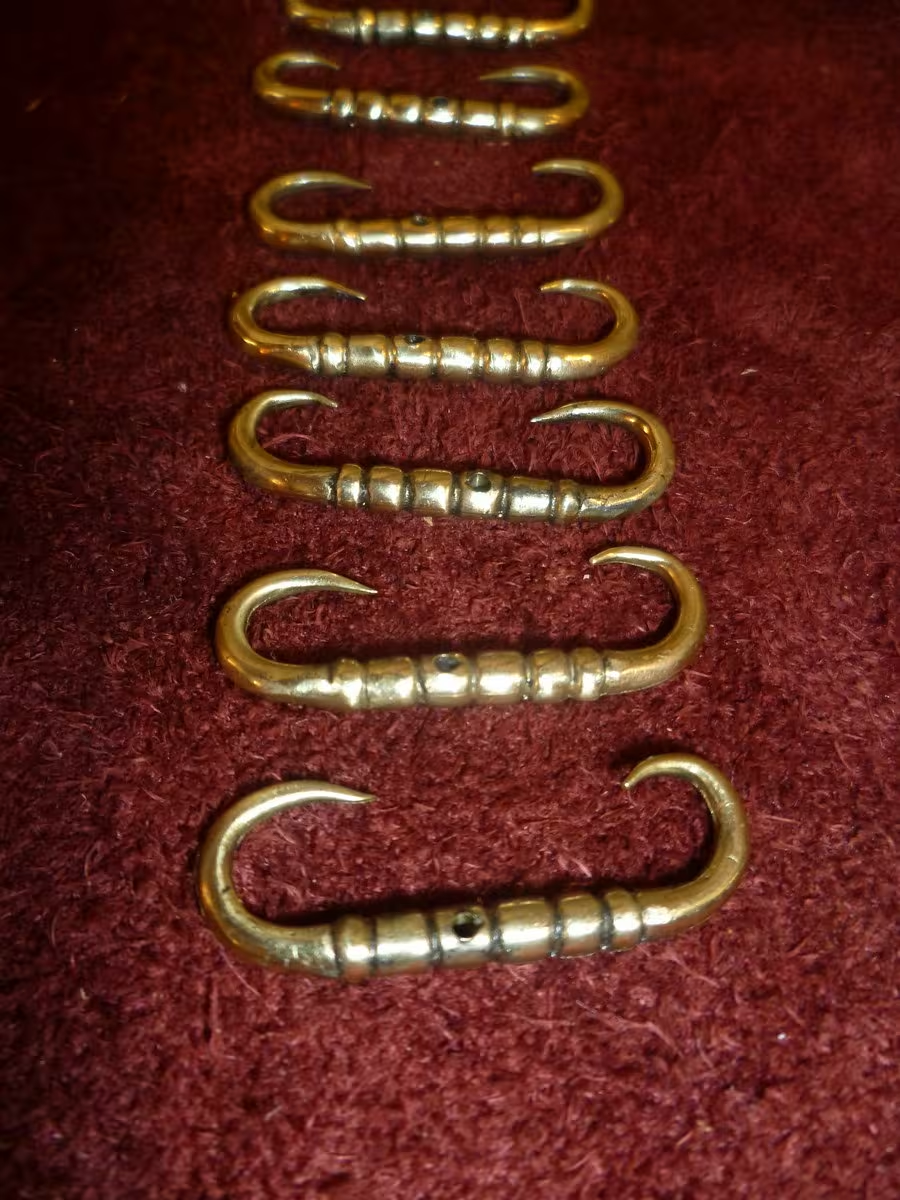
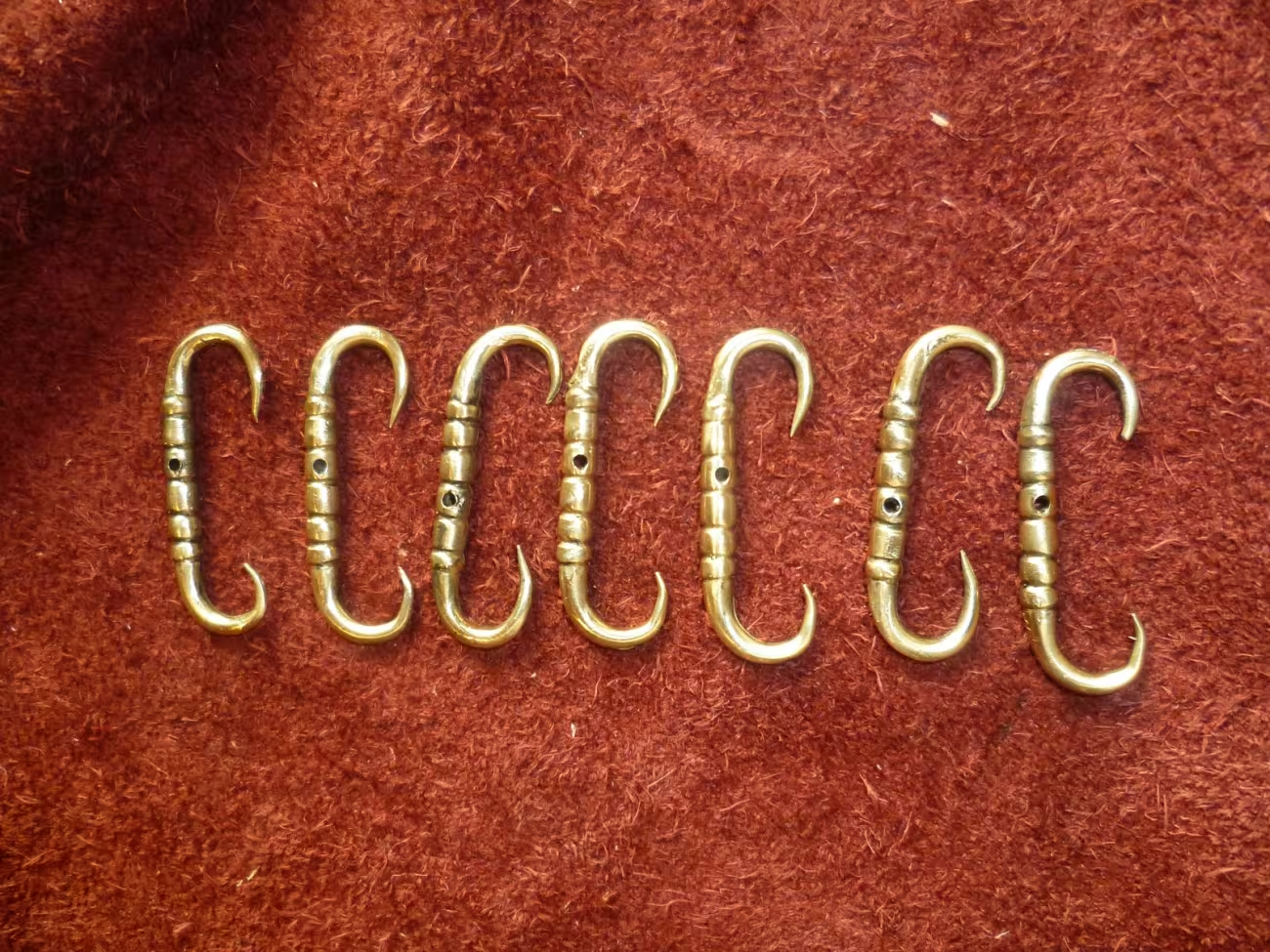
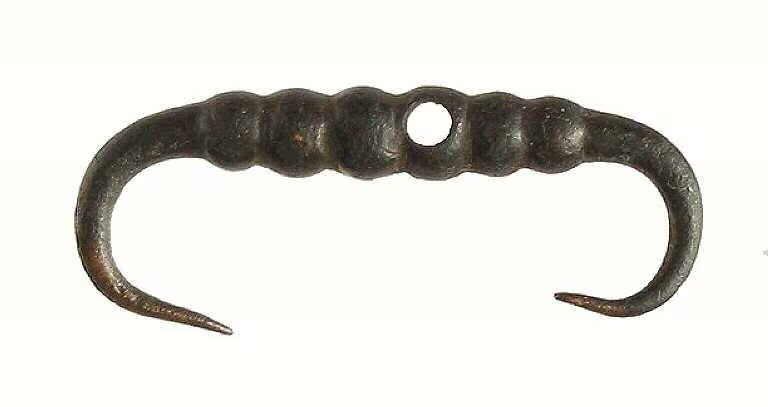
Bronze double-hooked clasp of circular section.
The body of the clasp consists of six spheres of decreasing size joined to one another. One of them is pierced. The hooks are evenly curved and turned slightly inwards. A similar example was found at Vienne (Isère) and dated to the 7th century. A 7th-century date can therefore be proposed for this clasp.
Double-hooked clasps were used to fasten clothing. They are known from the Roman period, but their use in the Merovingian period is particularly attested from the 7th century. At first contemporary with equal-arm bow fibulae and with stamped and filigree fibulae, they were worn together with them, sometimes linked by a small chain held by a little hook passed through the hole in the clasps. With the gradual disappearance of grave goods, they are the last objects found, often alone and in varying numbers, in graves of the late Merovingian period from the 8th century onwards, although their presence is attested until the 9th century. Linked to a Roman tradition, they are found in regions where the Germanic populations underwent strong Romanisation, north and east of the Loire, with a particular concentration in Burgundy, western Switzerland and Auvergne.
Dimensions: L. 3 cm; W. 1.1 cm; Th. 0.4 cm
- Materials
- Bronze Au choix : Argent, Bronze.
- Periods
- Merovingians and Carolingians