
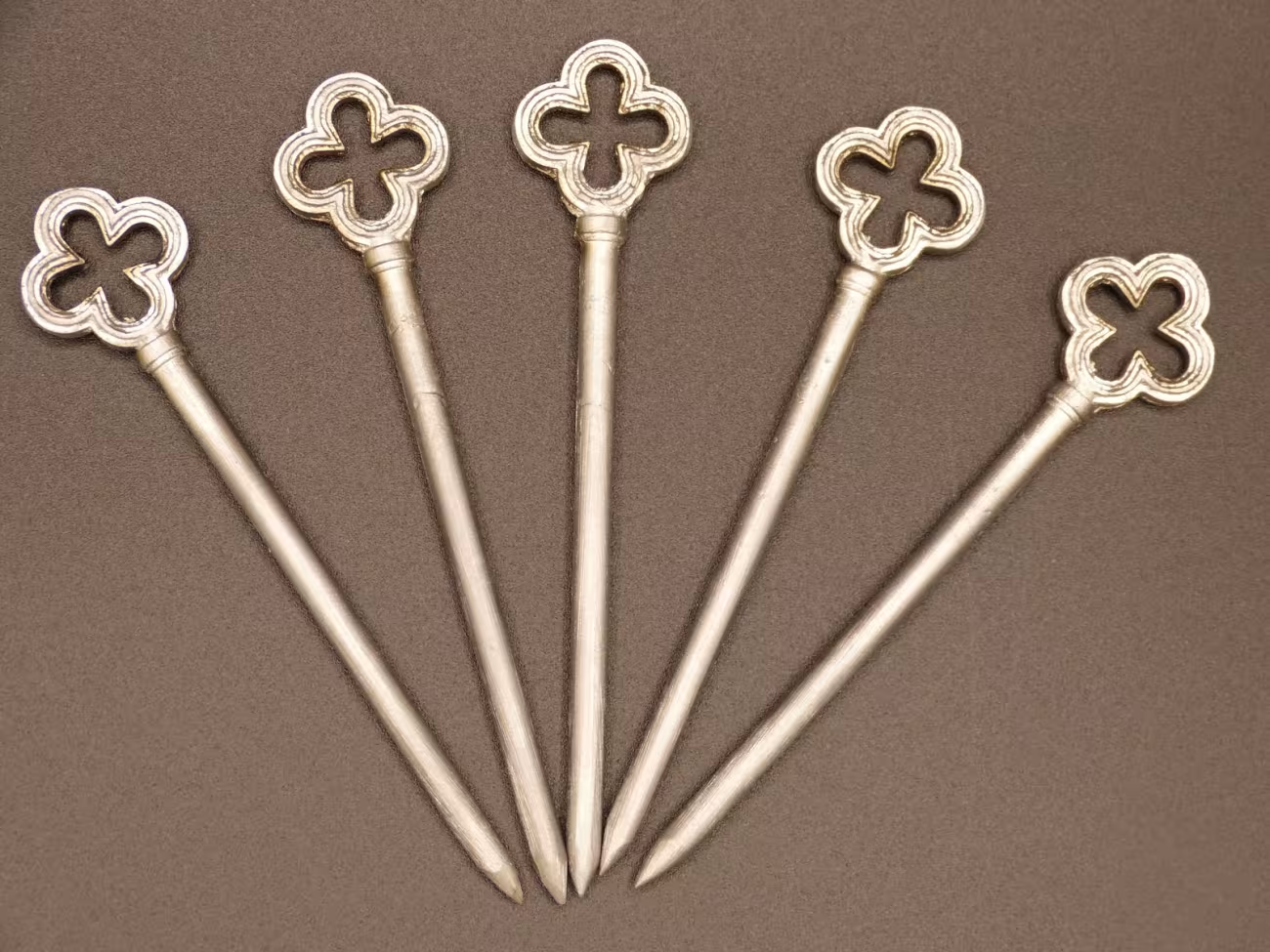
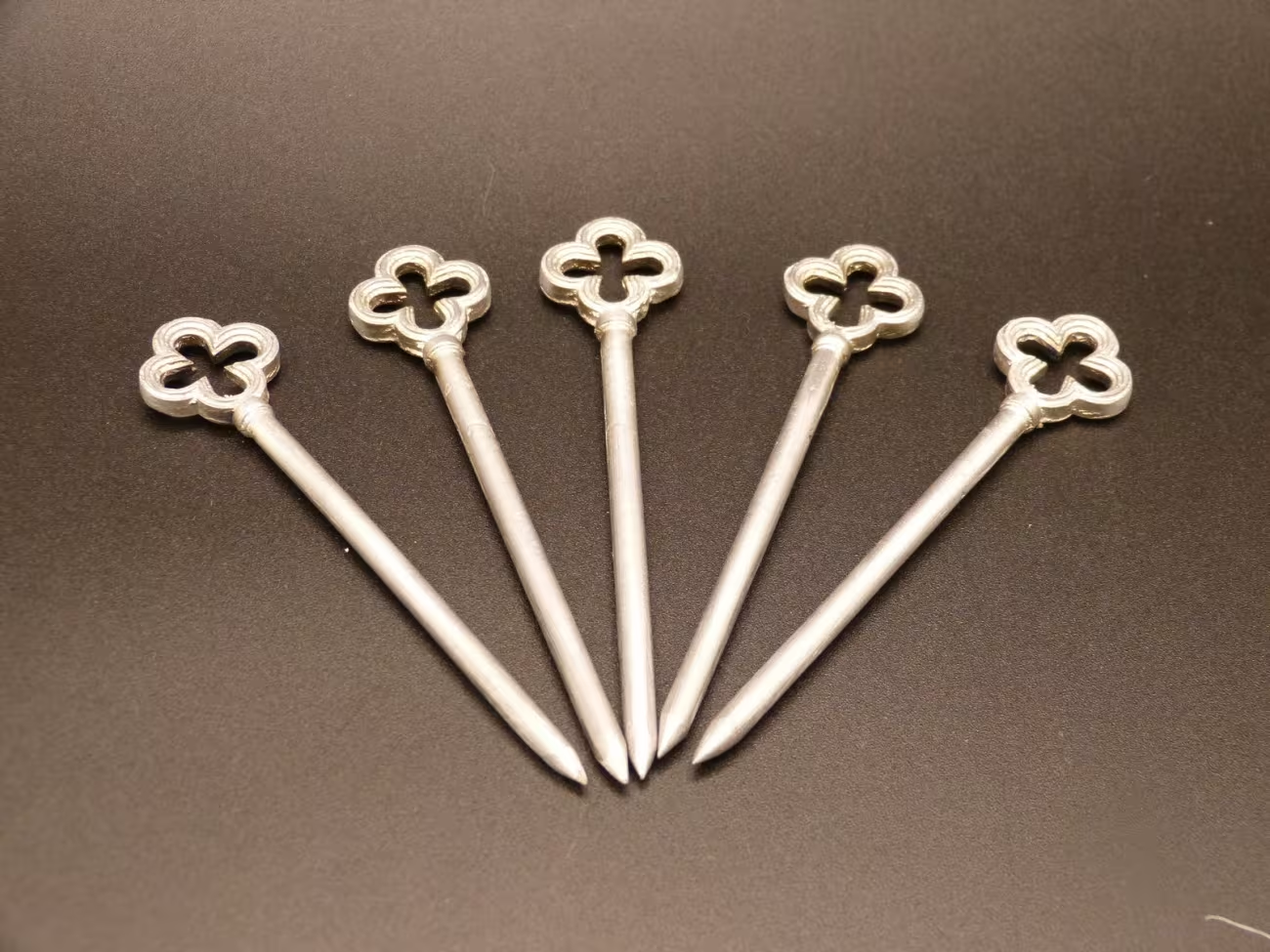
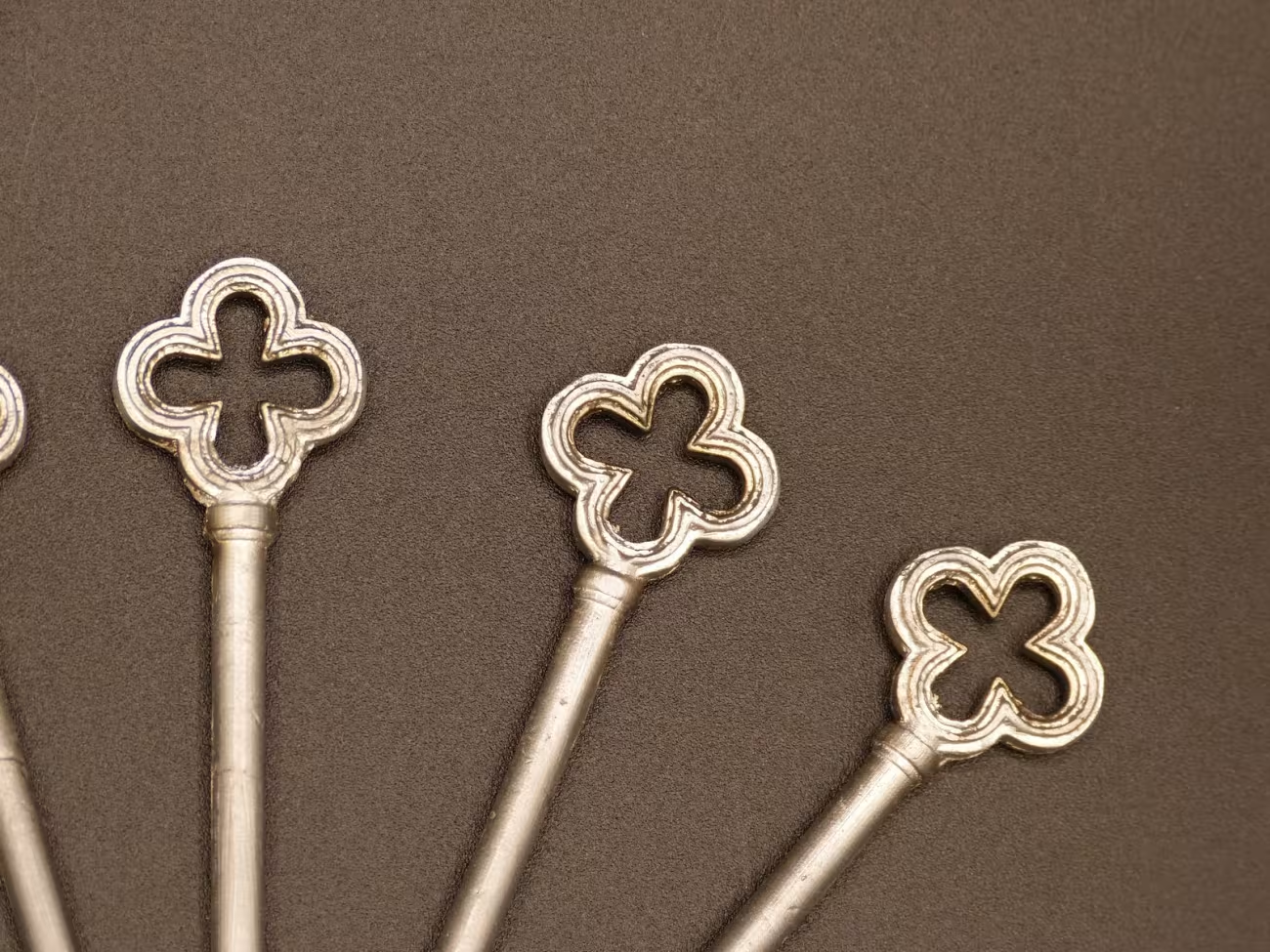
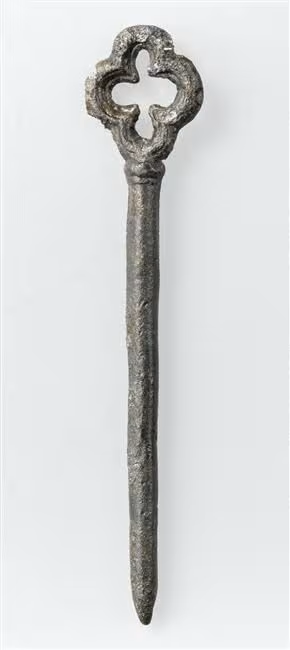
Openwork quatrefoil lead point (or lead stylus, lead pencil, plummet)
16 €
Lead points were used to "rule" writing surfaces, that is, to draw the lines for writing. They were also used for page layout, for sketching out illuminations, or for making drawings.
Drawing this metal point across the surface (papyrus, parchment, wood...) left a grey-black metallic trace, visible enough for preparatory work and discreet enough not to be intrusive once the work was finished.
It is one of the indispensable tools of any scriptorium.
Made of a lead-based alloy, its composition varies greatly: a lead/bronze mixture according to the historical sources (which means little in chemical terms), a lead/tin mixture according to metallographic studies, with traces of copper and antimony.
Its existence in the form of a point is attested from the 12th century in the writings of the monk Theophilus: "one draws on parchment with a stylus made of an alloy of three parts lead to one part bronze." But the method had existed since ancient Egypt, with lead discs rather than a stylus.
These unimpressive objects are only very rarely displayed in museums, like most everyday objects, in which archaeology takes little interest. Although a great many were recovered when the Seine was dredged during the Second Empire, they have since disappeared (private collections? losses? destruction?)
WARNING: this object contains lead and antimony; handle under appropriate conditions
- Materials
- Alliage plomb/étain/antimoine
- Periods
- Middle Ages, 12th-13th centuries (Crusades), Hundred Years' War and 15th century, Renaissance, 17th century, 18th century