
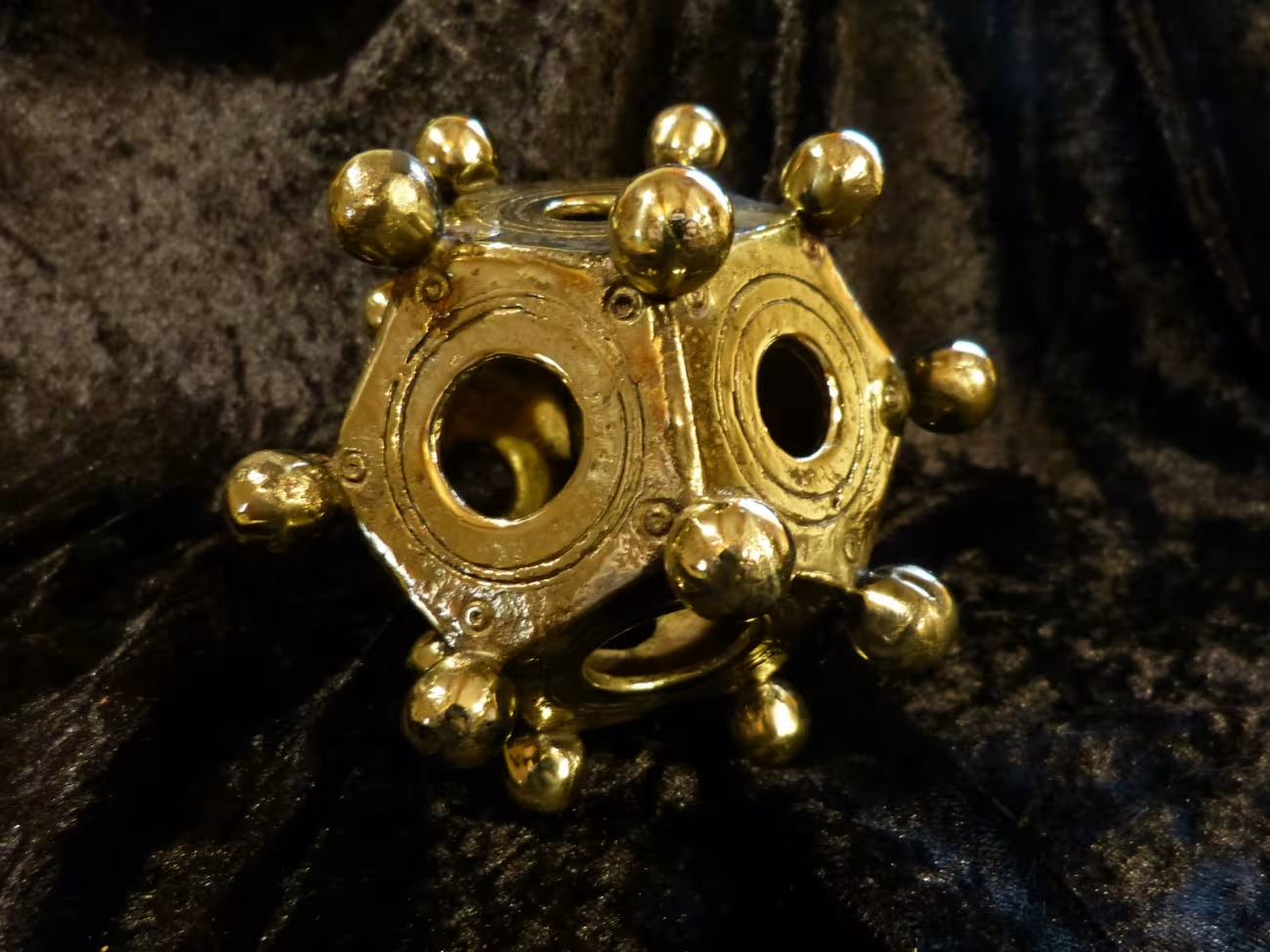
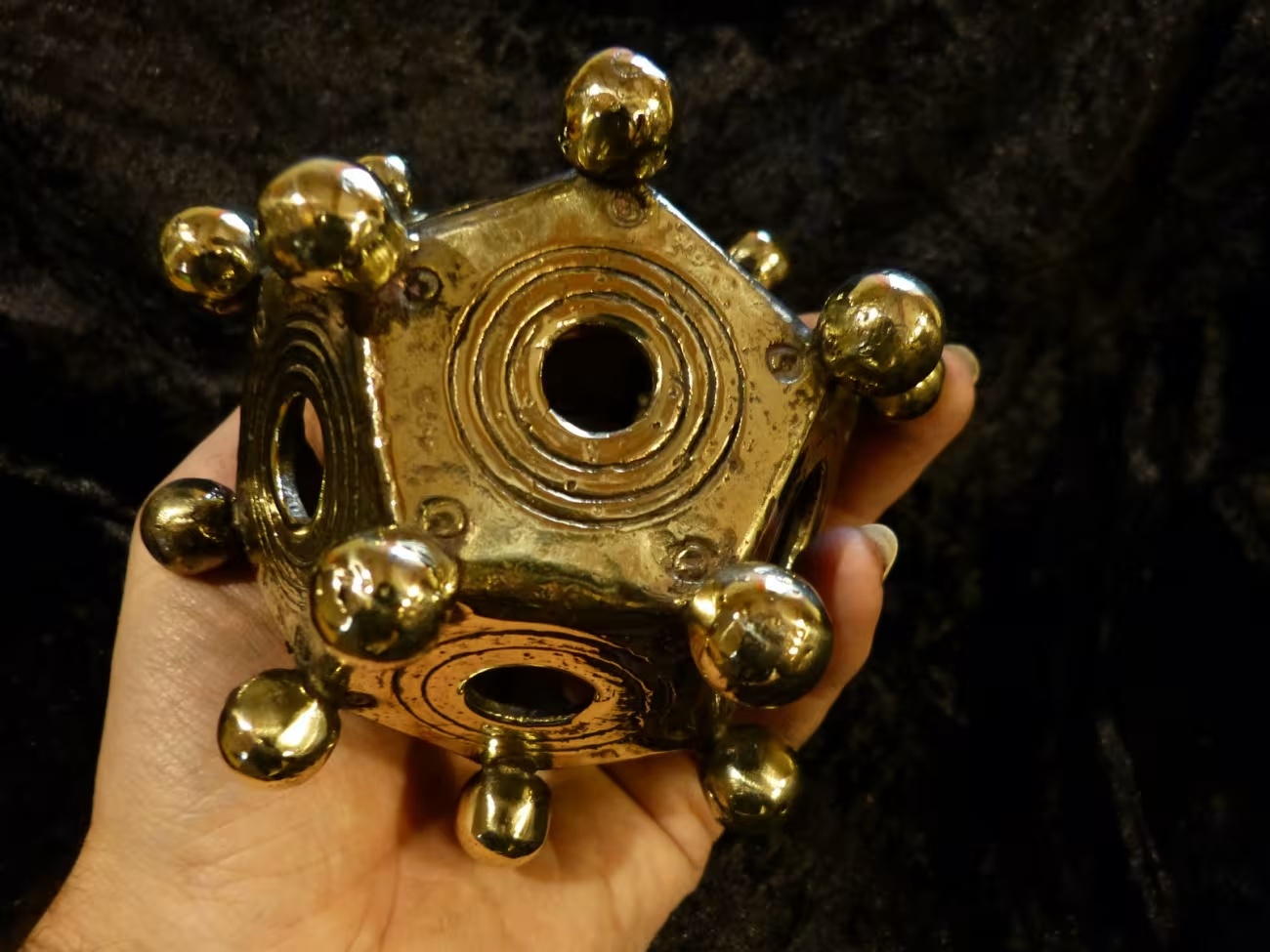
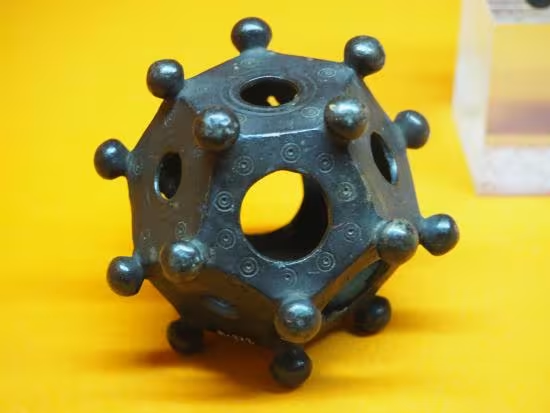
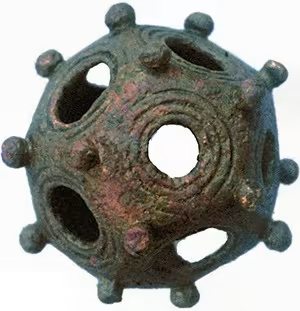
Roman dodecahedron
165 to 265 €
A Roman dodecahedron is a small hollow object of bronze or stone in the shape of a regular dodecahedron, with 12 pentagonal faces each pierced by a circular hole at its centre. These objects date from the 2nd to the 3rd century AD.
Around a hundred Roman dodecahedra have been found from England to Hungary and the east of Italy. Most were discovered in France and Germany. They range in size from 4 to 11 centimetres.
The function and use of these dodecahedra remain unexplained. No contemporary document, text or image mentions them. A great many hypotheses have been put forward, ranging from a candlestick, a die or an astronomical instrument to a gauge for water pipes, or a surveying tool. A religious use has also been suggested, based on the fact that most examples were found on Gallo-Roman sites.
The decorative motifs could vary widely while remaining simple: circles, lines, ring-and-dot motifs.
- Materials
- Bronze
- Periods
- Antiquity