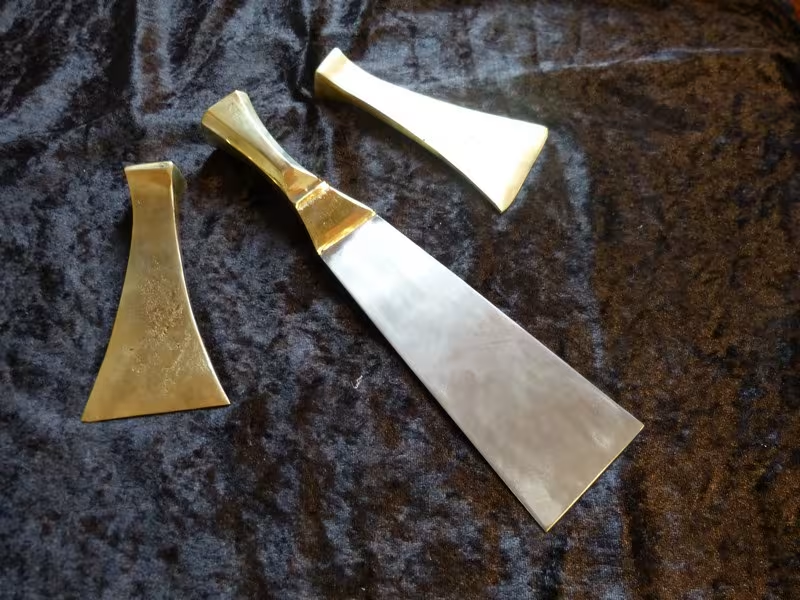
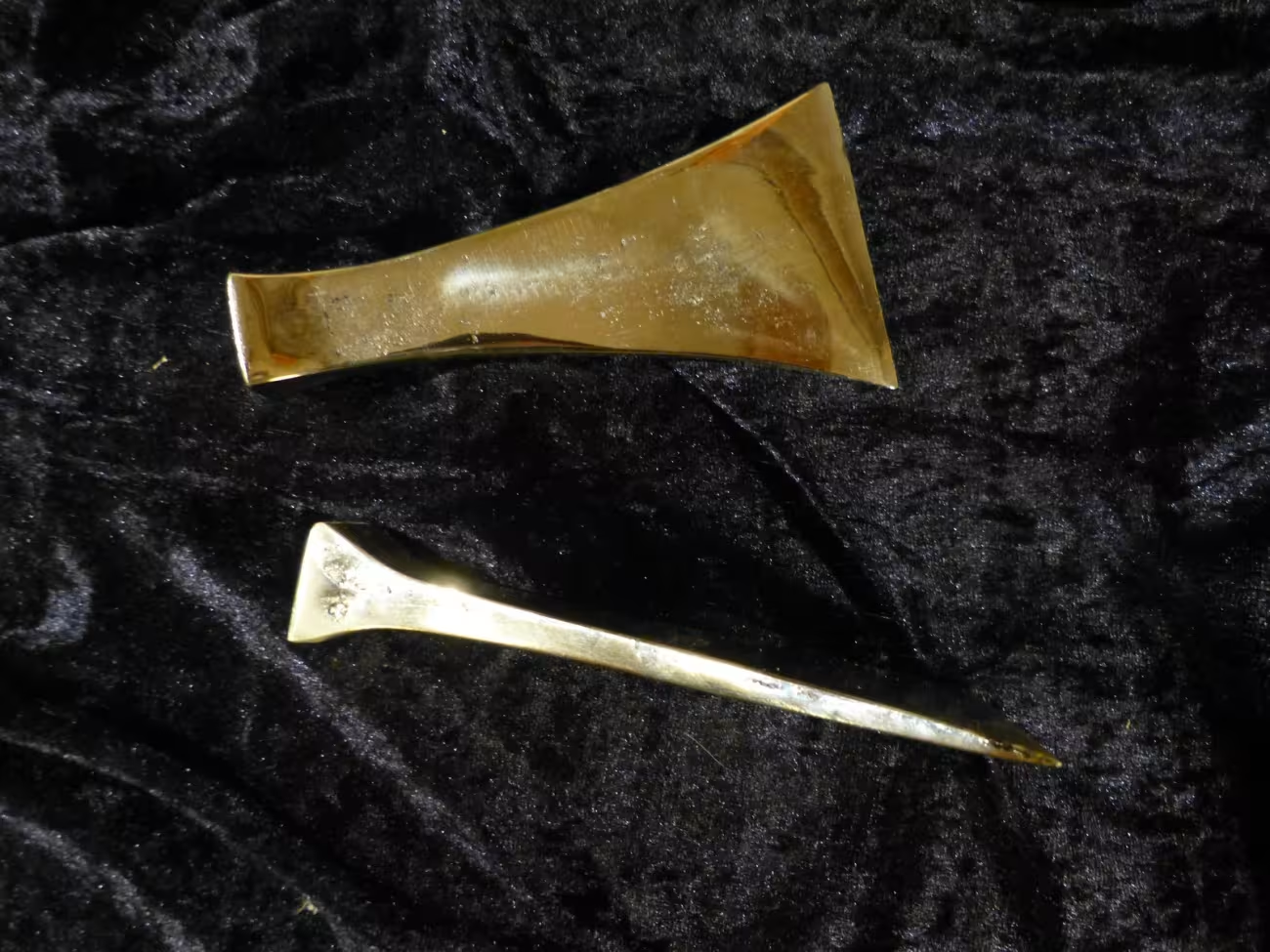
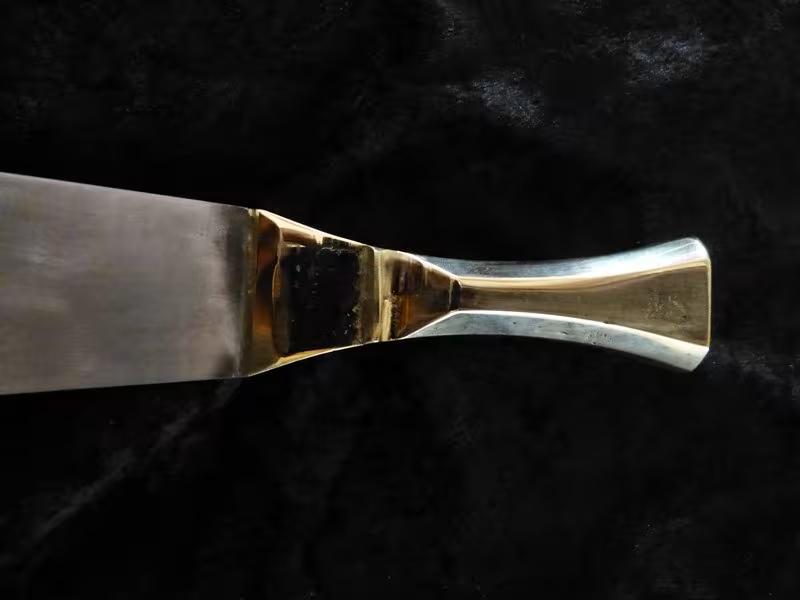
Wax spatula
Modèle A1:38€, modèle A3:58€
After a certain number of uses, the fragile layer of wax covering wax tablets can be damaged. In other cases, one wants to erase a whole page of notes to get back a blank surface. The spatula is then used to clean the page down to the wood (ad lignum), then to smooth, while hot, the tinted wax laid on the renewed page.
The most widespread form of wax spatula seems to be the one shown in Pompeian paintings: a flat triangular metal blade, topped by a more massive part with a flattened square top.
The massive part of the spatulas must have been used to spread the wax on the tablets, for example to flatten hardened lumps more easily: as the operation had to be done hot, the thicker metal kept the heat longer.
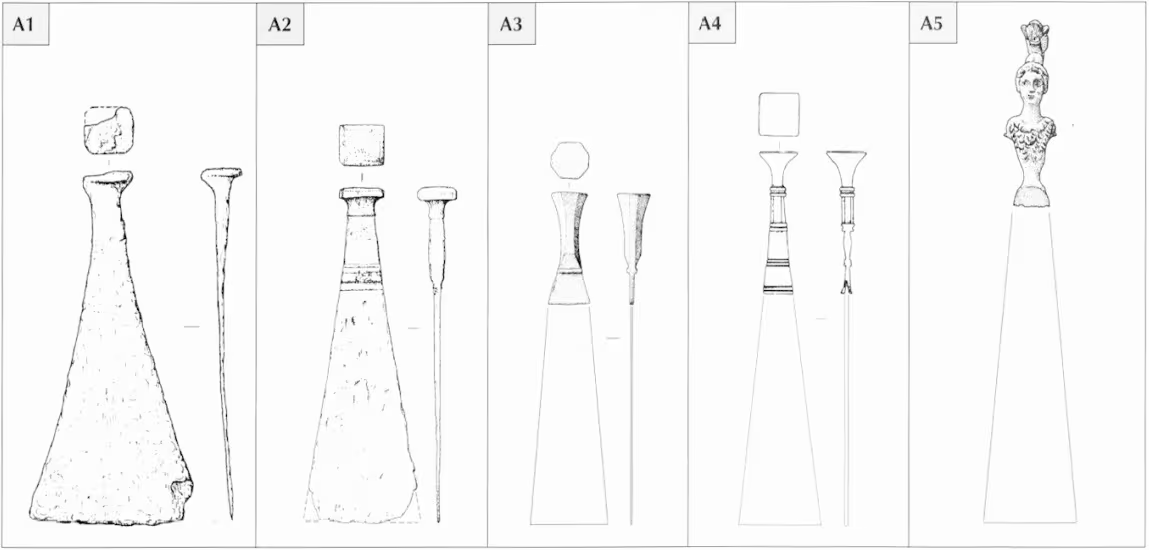
While type A1 is by far the most widespread, various models have a differently fashioned top: applied decoration (A2), faceted bronze handle (A3), a more elaborate variant (A4), handle in the form of a bust of Minerva (A5).
The chronology is still being refined, as not all these models were made and used at the same time: type A1 is found throughout the period in which tablets were used, from the 1st to the 16th century; type A3 at the end of the 2nd and in the 3rd century; type A5 in the 3rd century AD.
- Materials
- Bronze ou bronze et acier Au choix : Acier, Bronze.
- Periods
- Antiquity, Merovingians and Carolingians, Middle Ages, 12th-13th centuries (Crusades), Hundred Years' War and 15th century, Renaissance, 17th century