Wax tablets
13€ la page de 9 x 14 cm, elles peuvent êtres assemblées ensemble.
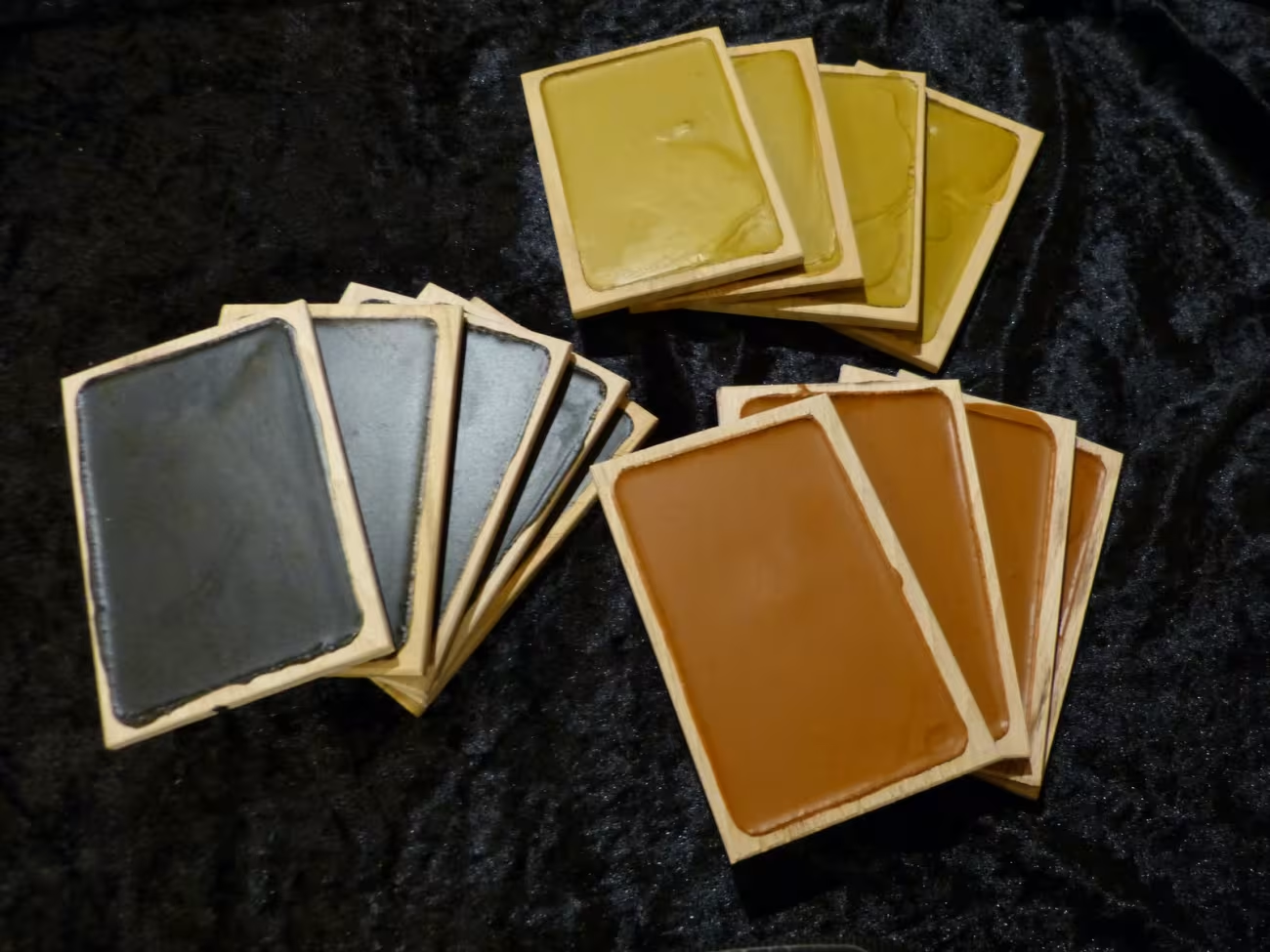
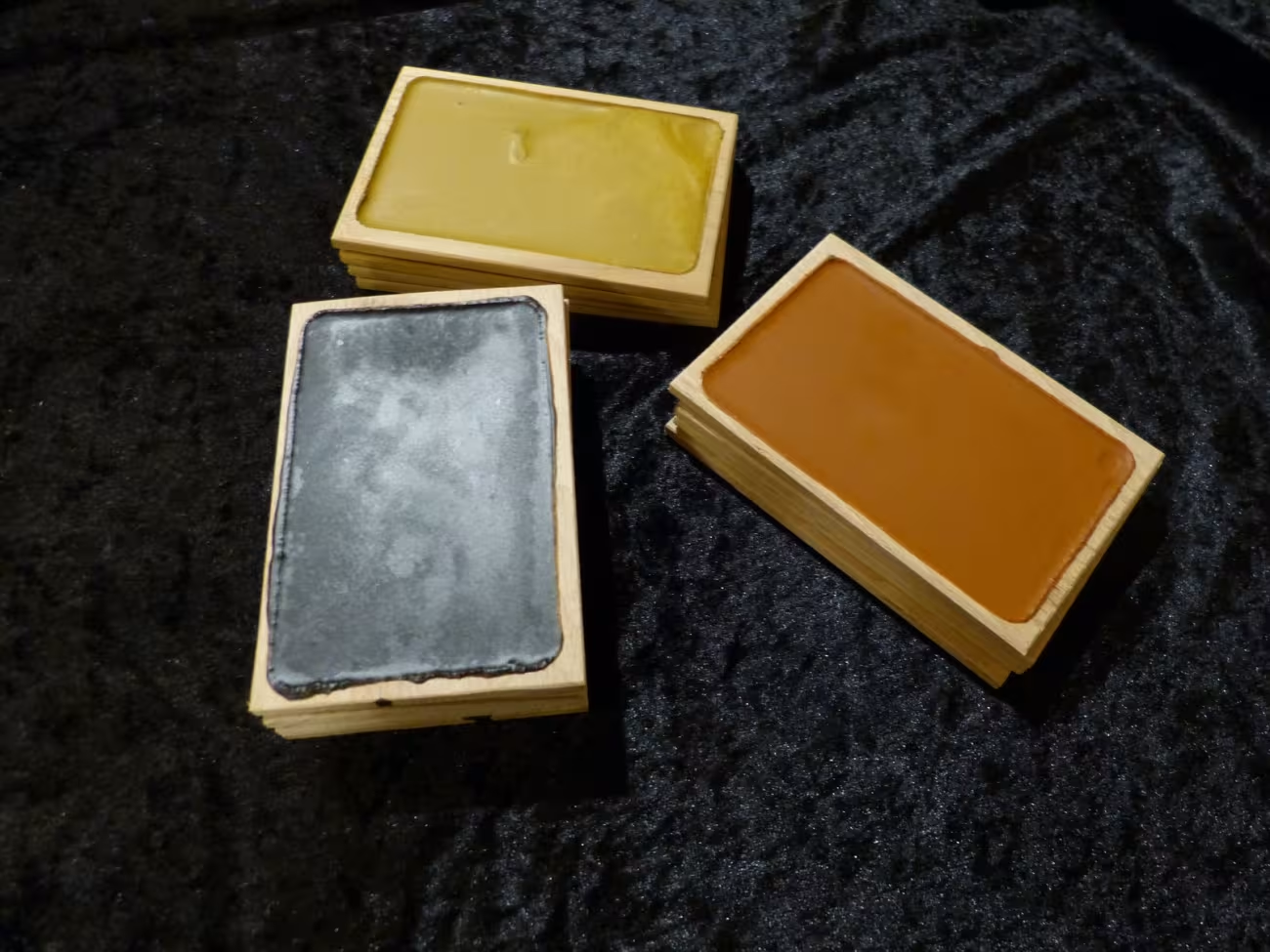
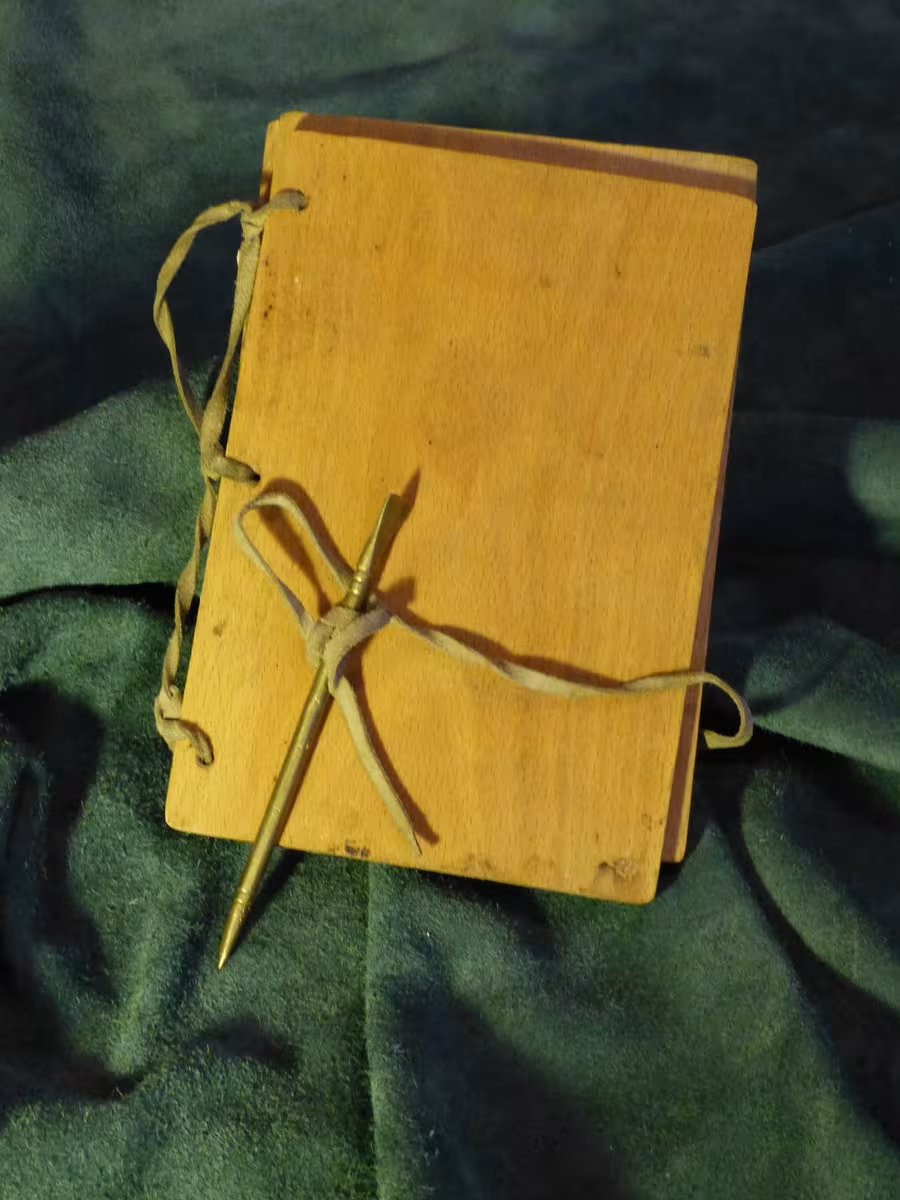
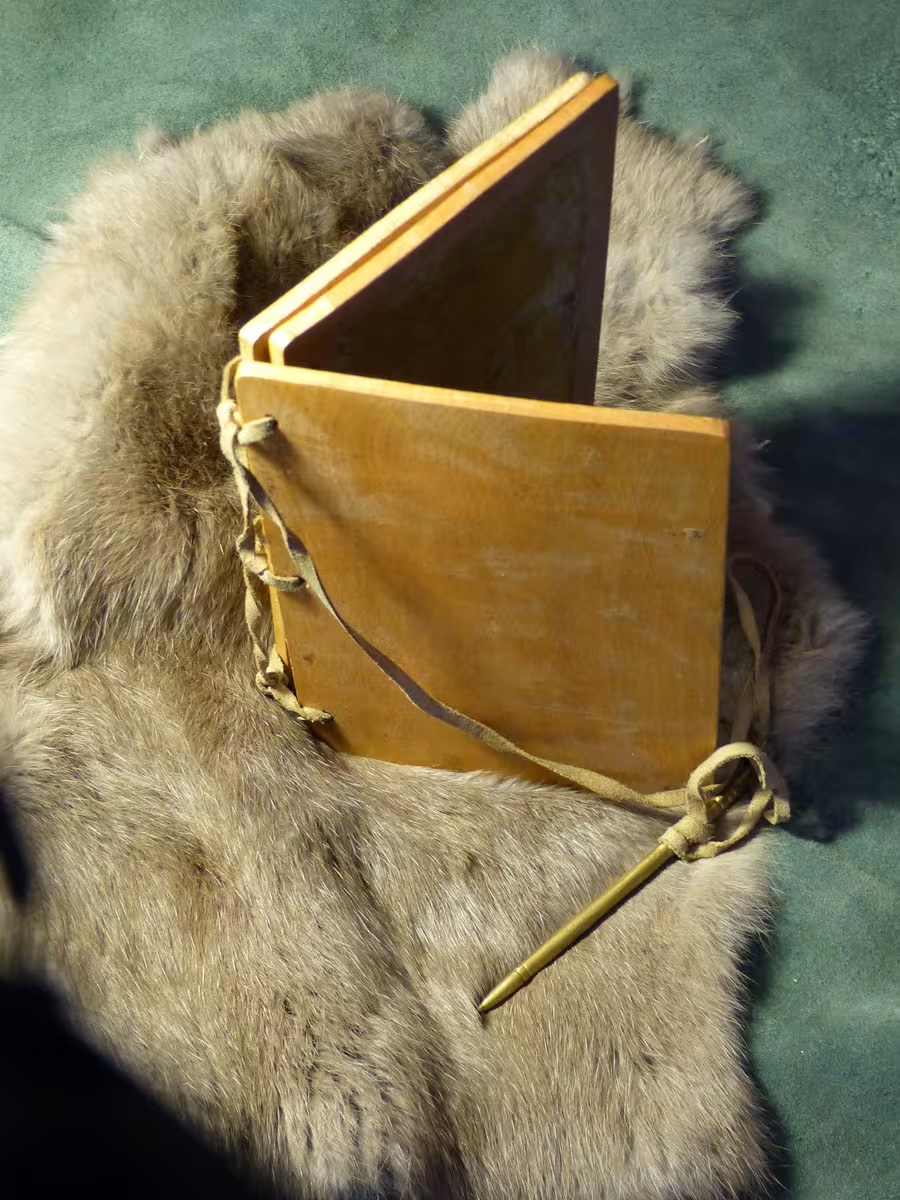
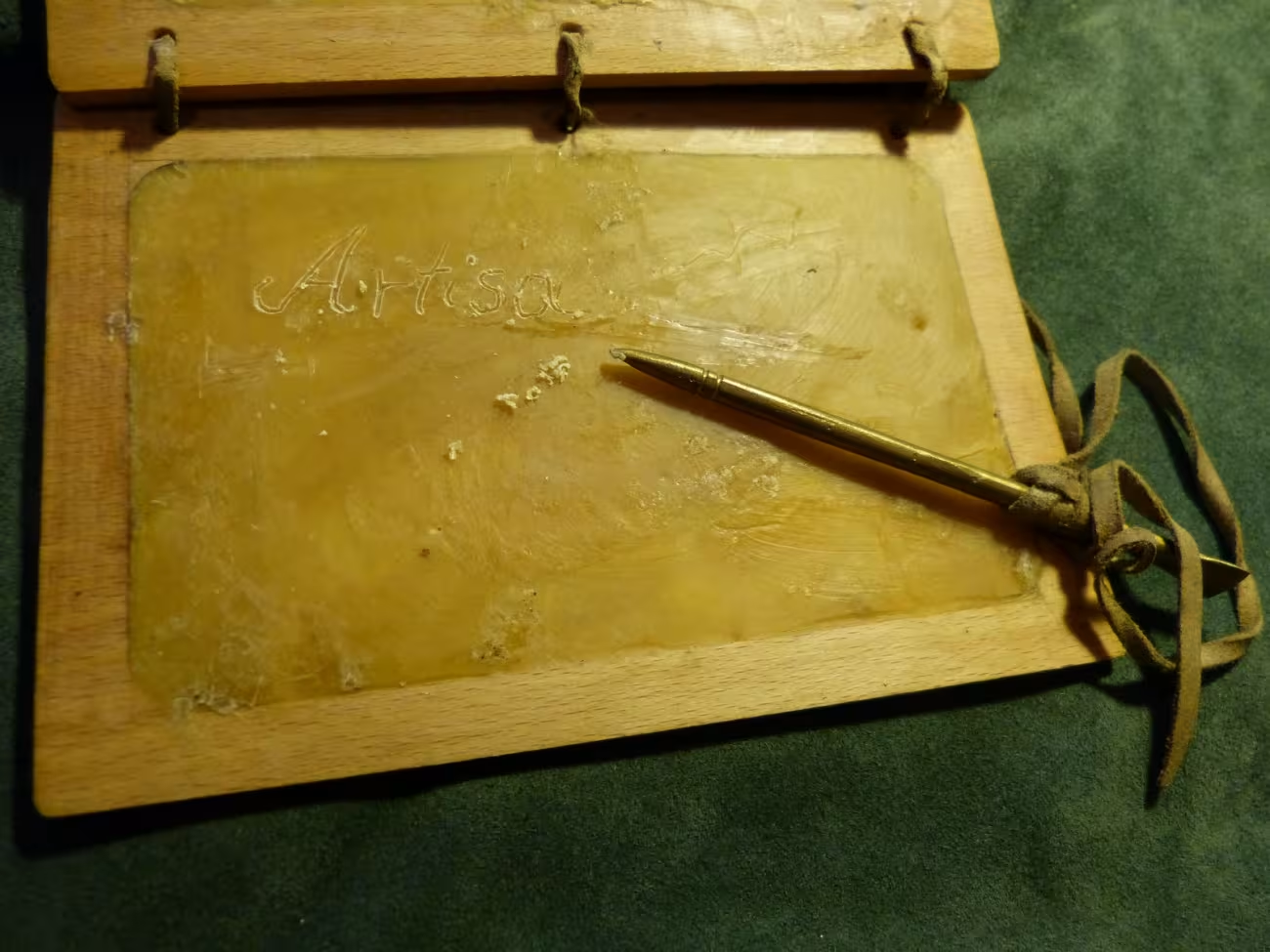
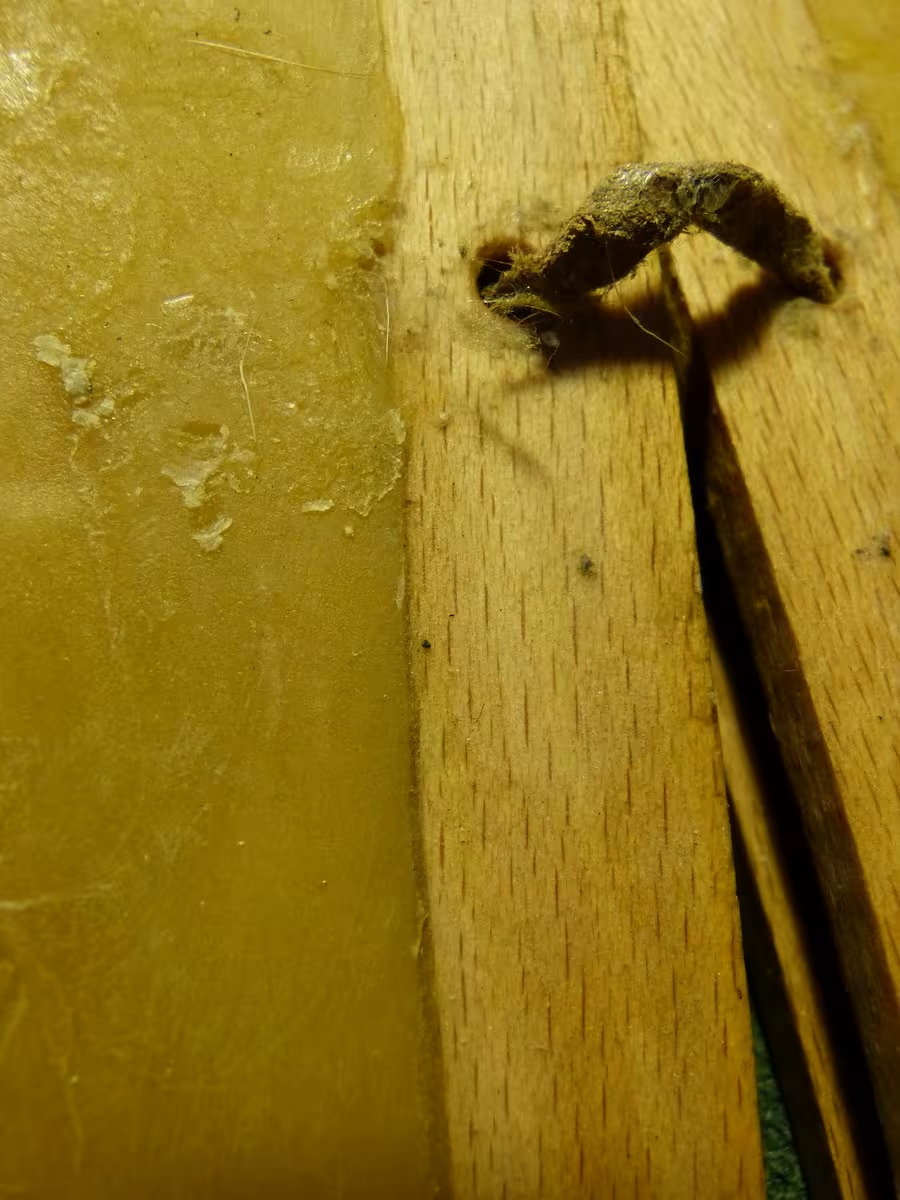
Beech tablets with an inlaid layer of beeswax. They can be made with the desired number of “pages”, joined by a cord or hinges.
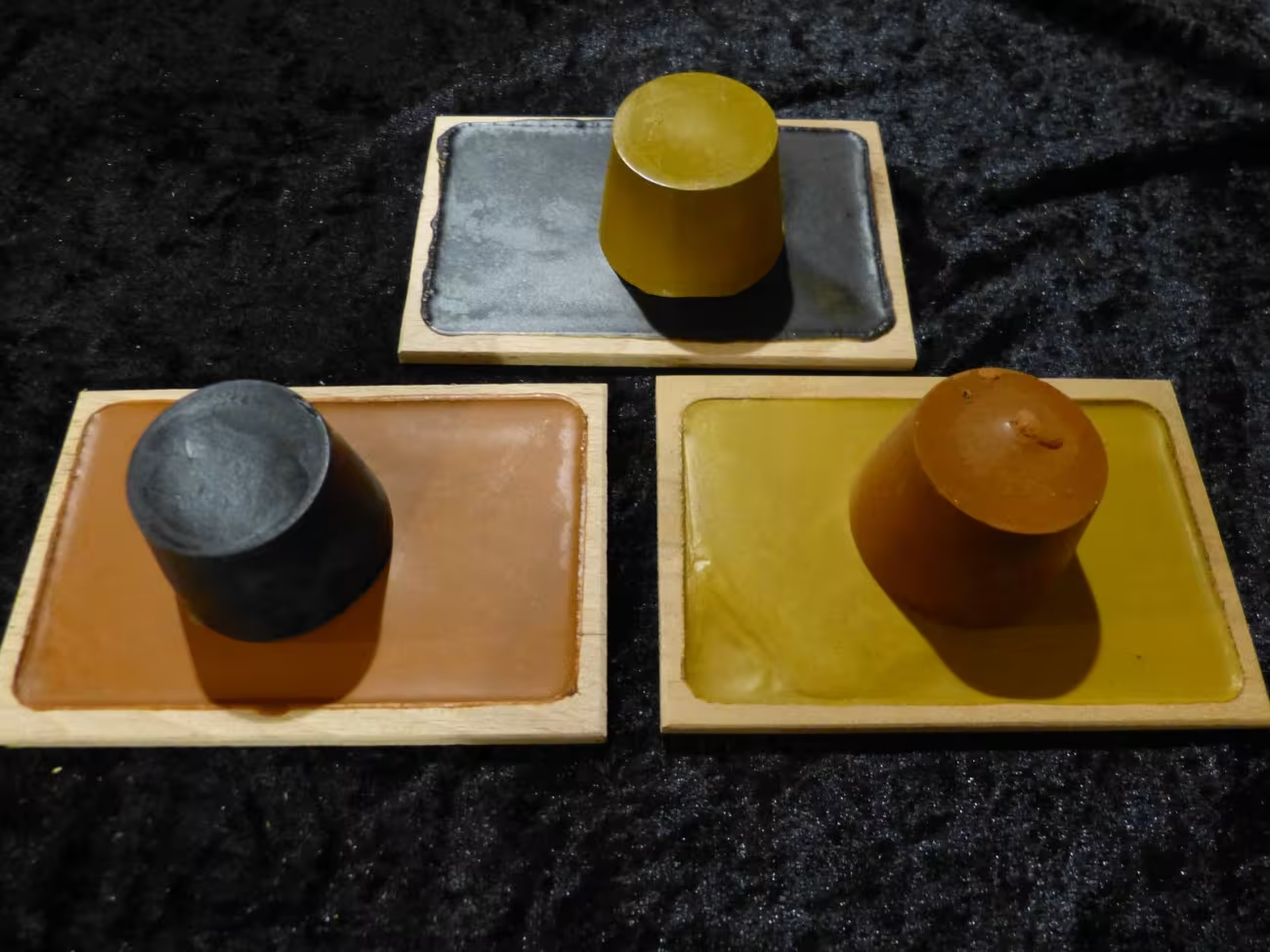
The beeswax can be natural (rare), dyed black (Antiquity and Middle Ages), green (Antiquity), or red and yellow ochre (Middle Ages).
Refills of dyed wax are available.
A short history:
The oldest known tablet comes from a Mycenaean ship and dates from the 14th century BC. Tablets written in cuneiform have also been found at Nimrud.
Because the writing could be erased and the tablet reused, the wax tablet was mainly used for drafting notes and keeping accounts. The Romans used it extensively for private correspondence, but also for administrative purposes requiring a degree of permanence and verifiability of the document.
The tablet makers, or “those who make writing tables”, formed one of the first craft organisations, recorded in Étienne Boileau’s Livre des métiers, written in 1268. Some tablets were crafted like true jewels, combining materials such as ivory, gold or silver.
The tablet thus survived through the Middle Ages and the Renaissance until paper became widespread. Public and abbey accounts from these periods have been preserved in the form of books of tablets. In 13th-century Paris, the guild of tablet makers made only tablets intended for writing. They were of horn, slate, silver or ivory and coated with green or red wax. Wax tablets are found throughout Europe and the Middle East.
From the 18th century, with advances in the making of paper and ink that lowered their cost, the use of wax tablets steadily declined; one of the last surviving examples is a set of two wax tablets used in 1864 to record transactions at the Rouen fish auction.
- Materials
- Hêtre et cire d'abeille Au choix : Acier, Argent, Bronze, Hêtre, Buis.
- Periods
- Middle Ages, 12th-13th centuries (Crusades), Hundred Years' War and 15th century, Renaissance, 17th century